Table of Contents
What Age Should a Puppy Be Potty Trained?
Bringing home a new puppy is exciting. Those paws. That nose. The puppy breath.
And then… the puddles.
One of the most common questions we hear at Cornerstone Dog Training is:
“At what age should my puppy be fully potty trained?”
Let’s clear this up the right way.
The Short Answer
Most puppies should be reliably potty trained by 4 to 6 months old — if training is done consistently from day one.
But that doesn’t mean they magically wake up one morning at 16 weeks and “get it.”
Potty training is a process. And like everything else in puppyhood, it depends on:
- Consistency
- Supervision
- A schedule
- Proper kennel use
- Clear communication
As we teach in Puppy Training Secrets, potty training isn’t about waiting for maturity — it’s about building habits early.
What Happens at Each Age?
8 Weeks Old
At 8 weeks, your puppy:
- Has very limited bladder control
- Needs to potty every 1–2 hours when awake
- Will need nighttime potty breaks
- Has zero understanding of “where” to go
This is not a failure stage. It’s a foundation stage.
At this age, you are building:
- Routine
- Location association
- Supervised habits
If you wait to “start later,” you’re already behind.
10–12 Weeks Old
Now your puppy:
- Can hold it slightly longer
- Is beginning to recognize the potty spot
- Is forming habits (good or bad)
This is where many people accidentally create long-term issues by:
- Free roaming too early
- Inconsistent schedules
By 12 weeks, puppies, for the most part should be sleeping through the night.
4 Months Old
At 16 weeks, most puppies:
- Can hold their bladder much longer
- Should be having very few accidents
- Should understand their designated potty area
If you’re still having frequent accidents at this age, it’s usually a management issue, not a stubborn puppy.
Common causes:
- Too much freedom
- Not enough supervision
- Inconsistent kennel use
- Waiting too long between potty breaks
If you are still struggling with potty problems in the kennel, make sure there arent any underlying medical reasons. We love Dr. Pamela Johnson for our vet questions.
5–6 Months Old
By this stage, your puppy should:
- Sleep through the night without accidents
- Clearly understand where to potty
- Rarely, if ever, have indoor accidents
If potty training is still inconsistent here, it’s time to tighten structure.
Why Potty Training Takes Time
There are only a few repetitions per day.
Unlike “sit” or “down,” you don’t get 50 practice reps. You might get:
- 5–8 bathroom opportunities per day
That means:
- Every single one matters.
As we explain in Puppy Training Secrets this is why schedule and supervision are everything.
What Speeds Up Potty Training?
What determines what age should a puppy be potty trained?
Here’s what works:
1. A Strict Schedule
Dogs thrive on routine. Feeding times = predictable potty times.
2. Kennel Training
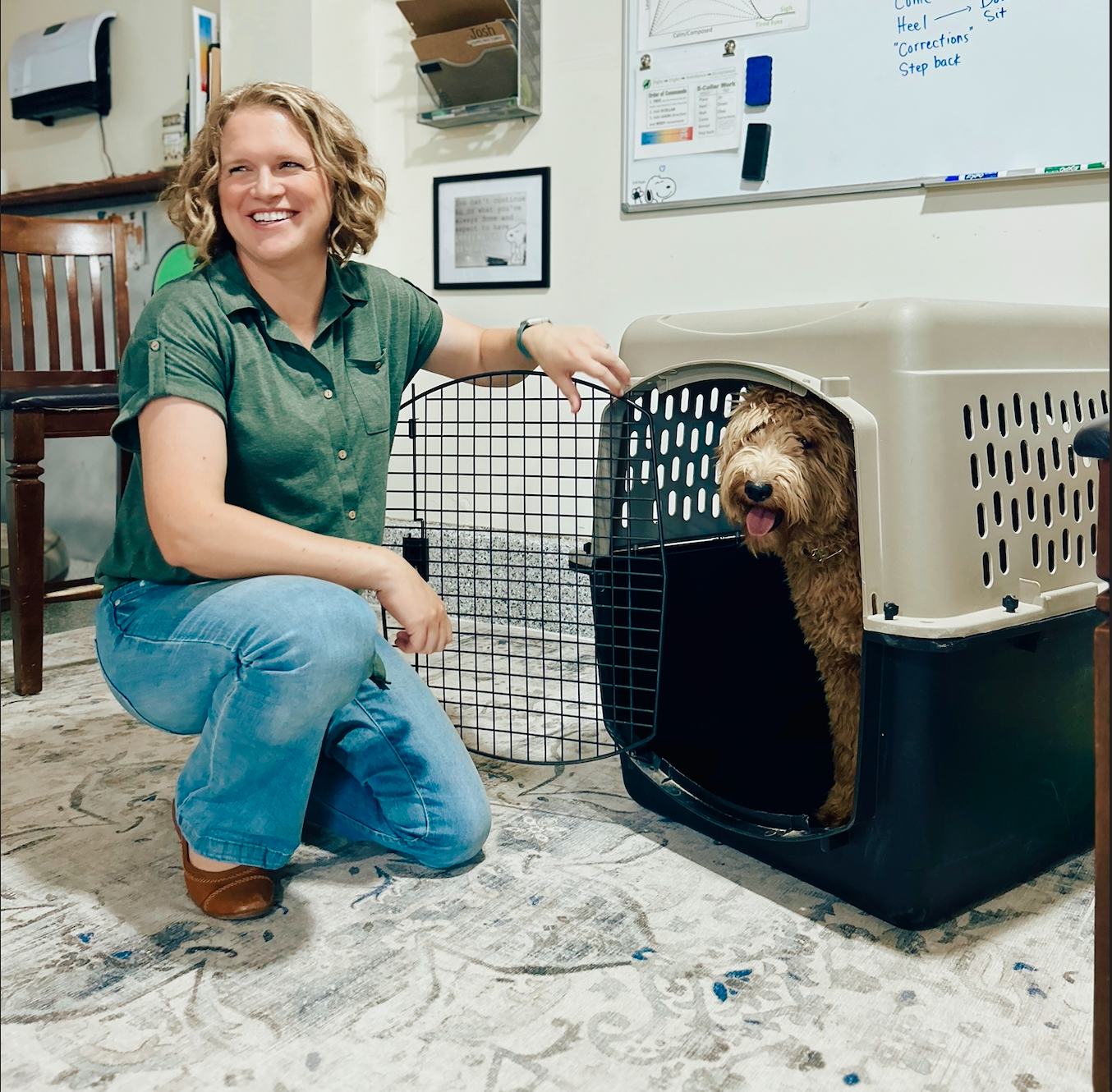
A properly sized kennel is your best potty-training tool.
Freedom is earned — not given.
3. One Designated Potty Spot
Same place. Every time. Clear boundaries.
4. Immediate Feedback
If you catch them in the act inside, calmly interrupt and redirect outside.
If you find it after the fact? Clean it and adjust your management.
When Should You Be Concerned?
You may want to consult your vet if:
- Your puppy is peeing every 20 minutes
- There’s constant dripping
- There’s frequent diarrhea
Medical issues like UTIs can sabotage even the best training plan.
What age should a puppy be potty trained won’t matter if there are underlying medical issues.
The Bigger Picture
Potty training isn’t just about clean floors. Don’t worry about “what age should a puppy be potty trained” focus on, “what am I doing to build structure so my puppy can understand”.
It’s about:
- Structure
- Boundaries
- Clear communication
- Leadership
When done correctly, it builds trust and respect — not just bladder control.
And remember…
This is a 100-day journey from 8 weeks to about 22 weeks old. Progress, not perfection.
Stick with it.
You’re building a dog you can enjoy for the next decade — not just surviving puppyhood.
If you’d like help building a clear potty schedule and training plan for your specific puppy, we’re here to help.
Consistency now creates freedom later.