Table of Contents
Puppy Socialization: Raising a Calm, Confident Dog
You don’t build confidence in one big moment.
You build it in quiet reps.
Just like a child on their first day of school… nervous, unsure… and then one day, without even realizing it, they’re confident. Comfortable. Composed.
That’s exactly how puppy socialization should work.
Not chaotic.
Not overwhelming.
Not a free-for-all at the dog park.
But calm. Controlled. Intentional.
What most call puppy socializatoin, at Cornerstone, we call it composure training.
Amazon Affiliate Disclaimer
As an Amazon Associate, Cornerstone Dog Training earns from qualifying purchases. Some of the links on this page may be affiliate links, which means we may receive a small commission at no additional cost to you if you choose to make a purchase. We only recommend products we use, trust, or believe will genuinely benefit you and your dog.
What Puppy Socialization Really Means, and why people often get it wrong:
One of the biggest things people get wrong about puppy socialization is thinking it means more excitement. More dogs. More people. More touching. More chaos. They assume if their puppy is playing hard and getting tons of attention, they’re “doing it right.”
But high-adrenaline exposure is not the same as confidence. In fact, it often creates overstimulation, reactivity, and a puppy who believes every new environment is a party. True socialization isn’t about creating a social butterfly — it’s about building composure. It’s teaching your puppy to enter new situations with calm focus, not frantic energy. The goal isn’t a dog who loses his mind when he sees someone new. The goal is a dog who looks to you and says, “What are we doing here?”
Most people think socialization means:
- Letting every stranger pet your puppy
- Letting dogs wrestle wildly
- Exposing your puppy to everything all at once
But that often builds adrenaline — not confidence.
True puppy socialization builds calm confidence.
The goal is:
- Low anxiety
- Low (or controlled) adrenaline
- High focus on you
Because focus kills chaos.
If your puppy can walk into a new environment and look to you for direction instead of exploding with excitement or fear… that’s success.
Why This Stage Matters So Much
The primary socialization window is 3–6 months old.
During this time, your puppy is forming opinions about the world.
Is it safe?
Is it overwhelming?
Should I panic?
Should I explode with excitement?
The habits formed now often carry into adulthood.
Many adult dogs that “react” to:
- Men with beards
- Hats
- Metal bowls
- Bikes
- Loud noises
…were never abused.
They were simply never properly socialized.
And the unknown feels scary.
Dog Introductions (The Right Way)
Dog-to-dog introductions are where many puppies get adrenalized quickly.
Instead of immediate play, try this:
Step 1: Neutral Territory
Meet in a neutral space.
Step 2: Parallel Work
Walk several feet apart.
Practice heel.
Practice down.
Practice place.
Let the dogs exist near each other without touching.
Step 3: Controlled Proximity
Gradually move closer as adrenaline decreases.
Important:
Never allow dogs to meet on a tight leash.
Calm is good.
Explosive play is not the goal.
Human Introductions
Here’s the secret:
Your puppy should not think every human is a party.
Ask a friend to come over and:
- Ignore your puppy for the first 10 minutes
- Be boring
- No squealing, no baby talk
While your guest is present:
- Practice place
- Practice down
- Practice eye contact
This teaches your puppy:
“New people are normal. I stay calm.”
That calm foundation prevents a lifetime of jumping, whining, and overstimulation.
Loud Noises & Startling Events
Thunder. Fireworks. Motorcycles.
Your instinct might be to scoop your puppy up and soothe him.
But remember:
You get what you pet.
If you pet fear, you reinforce fear.
Instead:
- Act neutral
- Redirect focus
- Practice simple commands
- Reward calm
Teach your puppy to regulate himself — not depend on you to calm him.
That builds real confidence.
Field Trips: The Right Way to Do Them
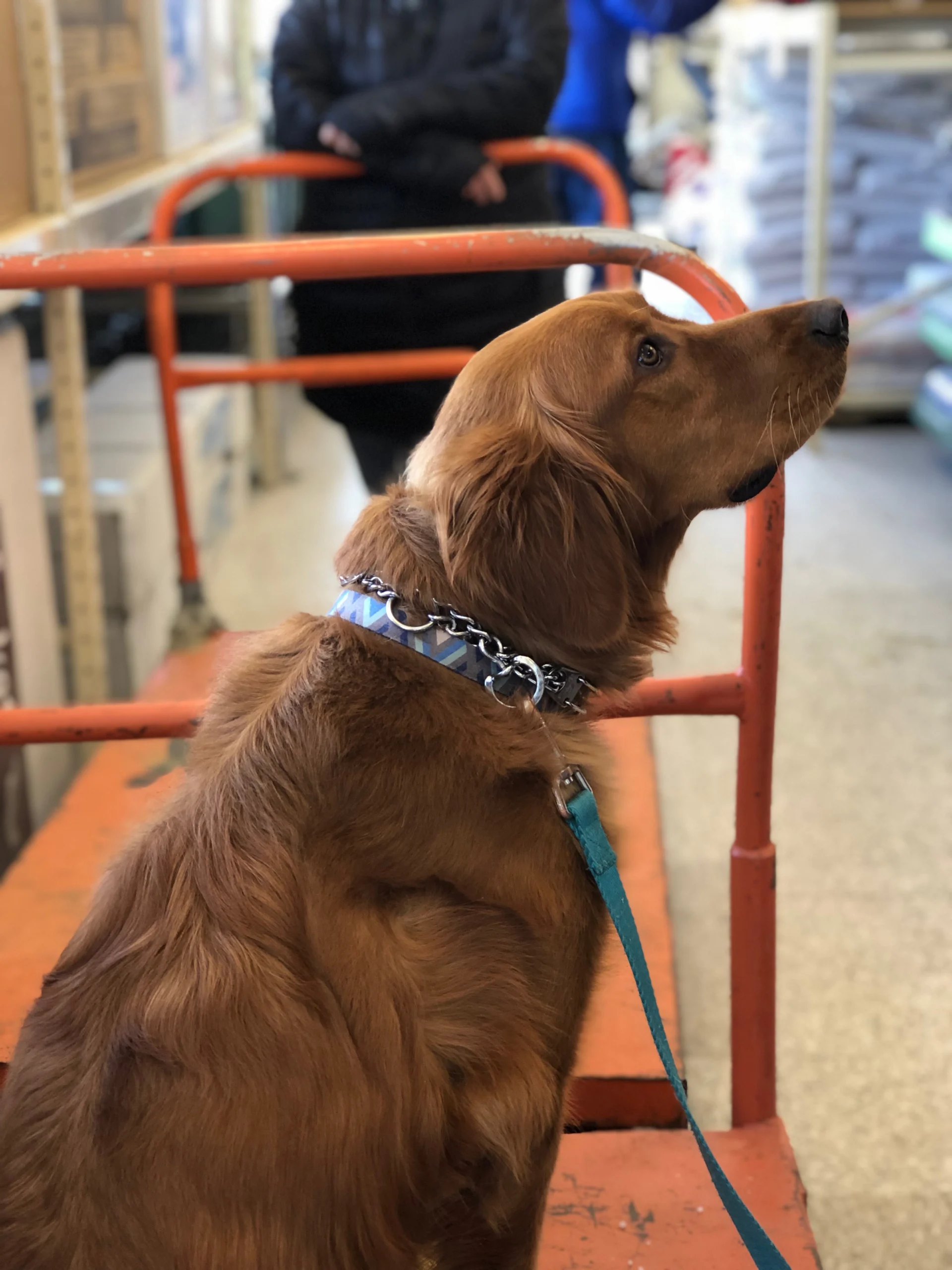
Puppy Socialization Field trips are not about showing your puppy off.
They’re about composure under distraction.
Start Small:
- Sit in the car.
- Practice focus in the parking lot.
- Work reps before entering the store.
Use Training Reps:
- Sit
- Down
- Eye contact
- Release
Short sessions are best.
Move forward only when your puppy shows:
- Focus
- Calm
- Engagement with you
If that means your first trip never leaves the parking lot? Perfect.
Go slow.
Short is good.
Focus is your friend.
The Puppy Socialization Checklist
Print this. Save it. Work through it slowly.
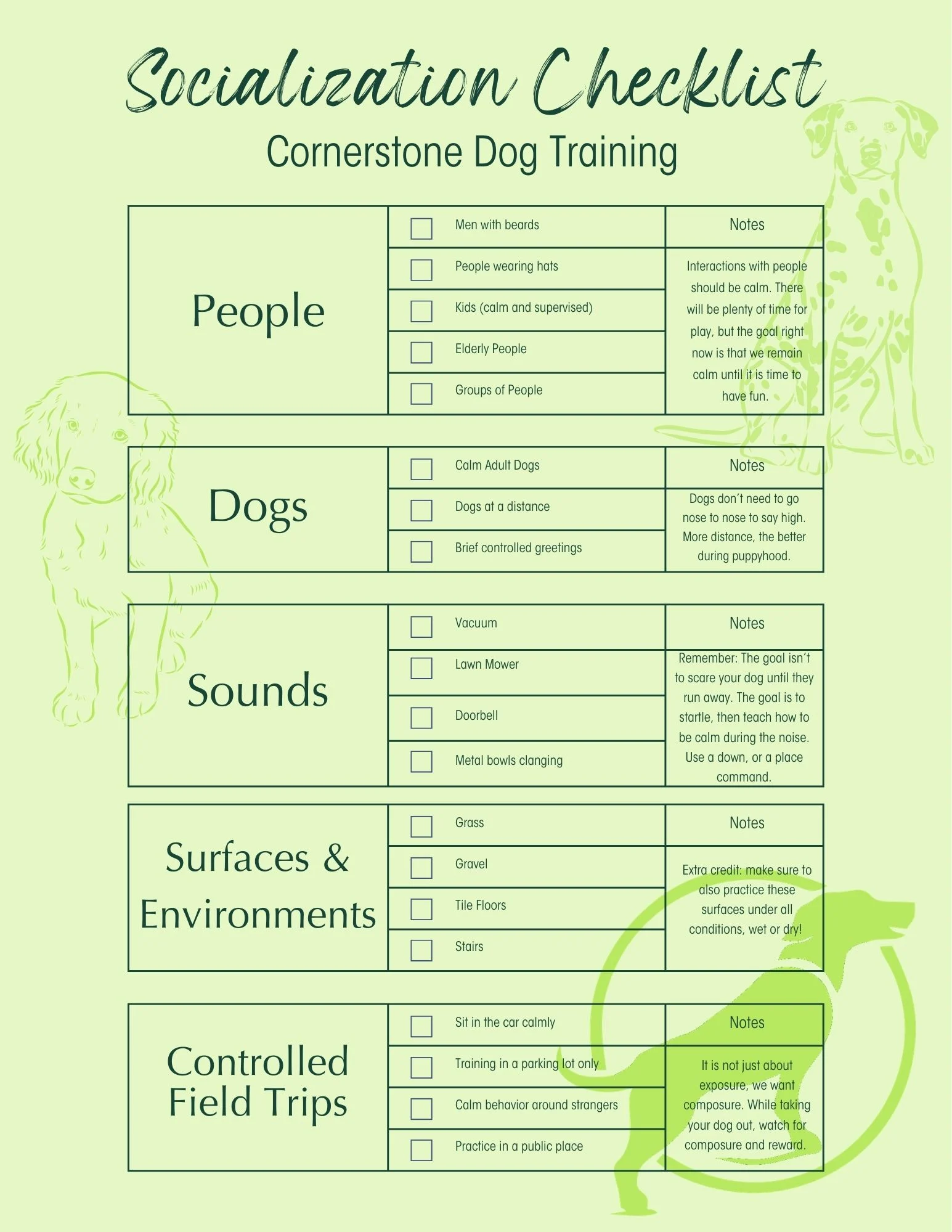
Remember: Quality > Quantity
The Real Goal
We’re not raising a puppy who:
- Loves everyone wildly
- Plays uncontrollably
- Gets overstimulated easily
We’re raising a puppy who can walk into any environment and think:
“I’m safe. I’m calm. I know what to do.”
That’s composure.
That’s confidence.
That’s freedom.
And it doesn’t happen by accident.
It happens by design.
If you’d like help implementing this step-by-step with video guidance and coaching support, our full puppy program walks you through each phase in order — so you’re not guessing.
Because these months?
They matter.
And what you build now can last a lifetime.
Schedule your free consultation today.